

SRv6 Policies with Explicit Paths
In SRv6, an SR Policy, as defined in RFC 9256, allows traffic to follow a predefined path instead of the shortest path computed by the IGP. When traffic is steered into an SRv6 TE policy, the ingress PE encapsulates the packet with an SRv6 header and inserts a segment list that defines the path toward the egress PE. Each transit node forwards the packet according to the instructions encoded in the segment list.
In this test, we validated SRv6 policies that used explicit paths. The ingress PE enforced a deterministic path across the network by applying a predefined segment list, that consisted of unique node µSIDs and defined the exact sequence of nodes that the packet had to traverse to the egress PE.
We verified the encapsulation by capturing data-plane packets and confirming that they carried an outer IPv6 header, where the destination address encoded multiple µSIDs using the F3216 µSID format.
Successful end-to-end delivery along the intended path confirmed correct SR Policy enforcement, proper µSID processing, and correct shift-and-forward behavior at each transit node, ensuring that packets followed the explicitly defined path.
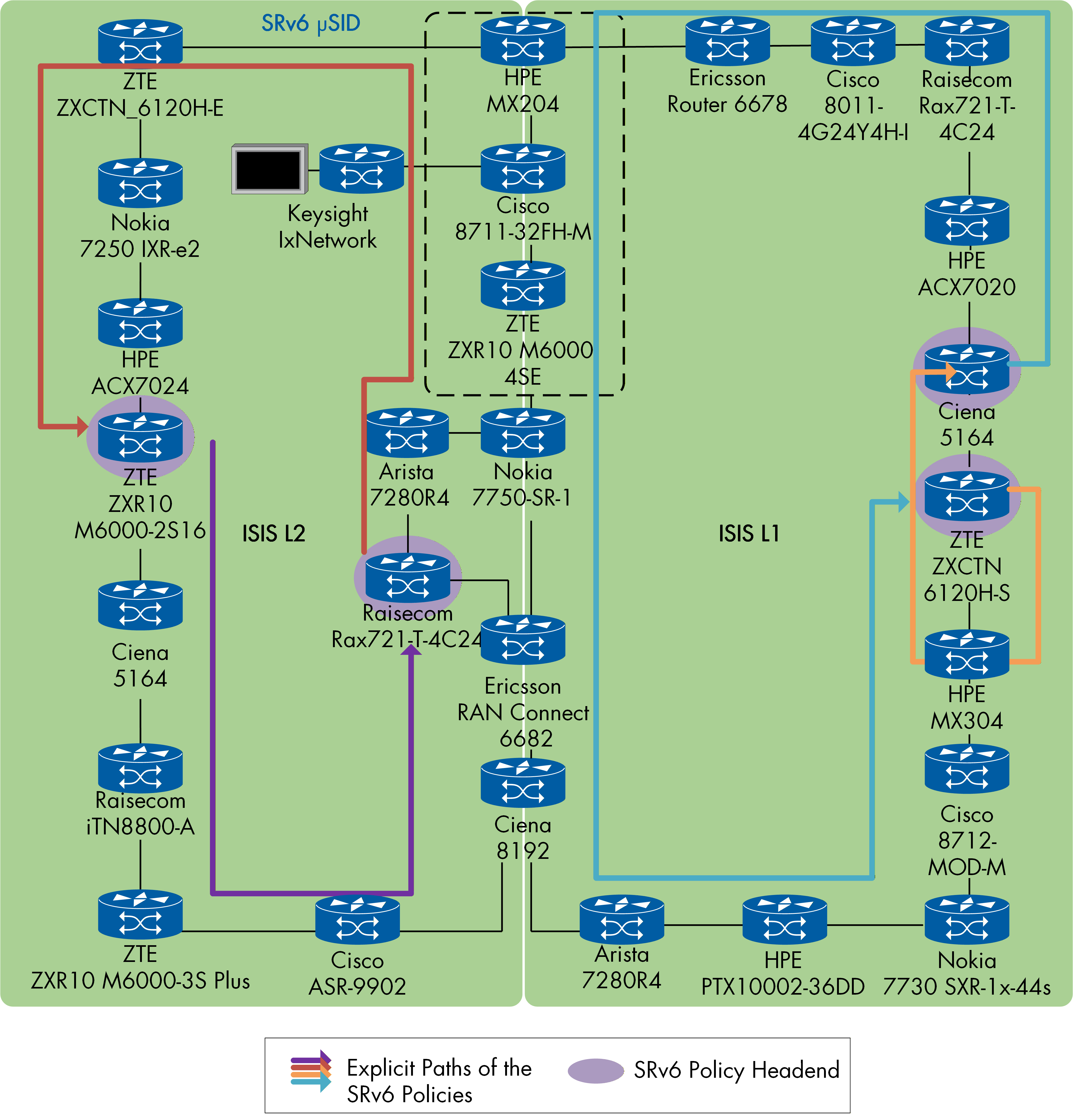
Figure 85:SRv6 Policy with Explicit Paths
| SR Policy Headend | Traffic Generator |
|---|---|
Ciena 5164, | Keysight IxNetwork |
ZTE ZXR10 M6000-2S16, | Keysight IxNetwork |
Table 60: SRv6 Policies with Explicit Paths - µSID
| < Previous | Next > |