

SR-MPLs Flexible Algorithm
Flexible Algorithm enables operators to build multiple logical topologies over the same SR-MPLS infrastructure based on specific constraints such as TE metric or delay. The aim of the test was to ensure that multi-vendor implementations correctly compute and enforce Flex-Algo paths using both statically configured and dynamically measured delay metrics. We verified interoperability of SR-MPLS Flexible Algorithm (Flex-Algo) behavior across the multi-vendor domain by steering traffic over two different Flex-Algo planes based on the Traffic Engineering (TE) metric and delay. In the beginning, we established ISIS with segment routing and flex-algo and ensured that all participating nodes would advertise the required algorithm information and segment identifiers (SIDs). We set the TE metric to 100 and the delay to 10 on all links and used it as a baseline. We then created two distinct path preferences by selectively adjusting the link attributes on the desired paths. For each device under test, we reduced the TE metric on one candidate path to 10 so that the TE-based Flex-Algo preferred that route, while we adjusted the delay metric on an alternative path so that the delay-sensitive Flex-Algo selected a different route. We repeated this metric adjustment for the participating devices. In each case, we verified that routes and forwarding entries matched the expected Flex-Algo selection and that traffic was delivered successfully end to end.
We also validated SR-MPLS Flexible Algorithm 128 (delay-based) with dynamically measured link delay values using TWAMP Light. We configured TWAMP Light on each ring link marked with “D” to perform two-way delay measurements, where the sender timestamps probe packets, and the reflector returns the corresponding timestamps, allowing the round-trip delay to be calculated without requiring time synchronization. The measured delay values were fed into IS-IS and advertised as delay metrics, allowing Flex-Algo 128 to compute shortest paths based on accumulated end-to-end delay across the ring. Links marked with “one ms” used a static delay value, while the “D” links used dynamically updated delay values. After confirming the initial preferred path selection, we manually increased the delay on one link in the preferred direction and observed the updated delay advertisement trigger a Flex-Algo recalculation. Traffic was routed to a different path in the topology, which confirmed that the Flex-Algo delay topology responded to the live delay metric changes calculated using TWAMPLight.
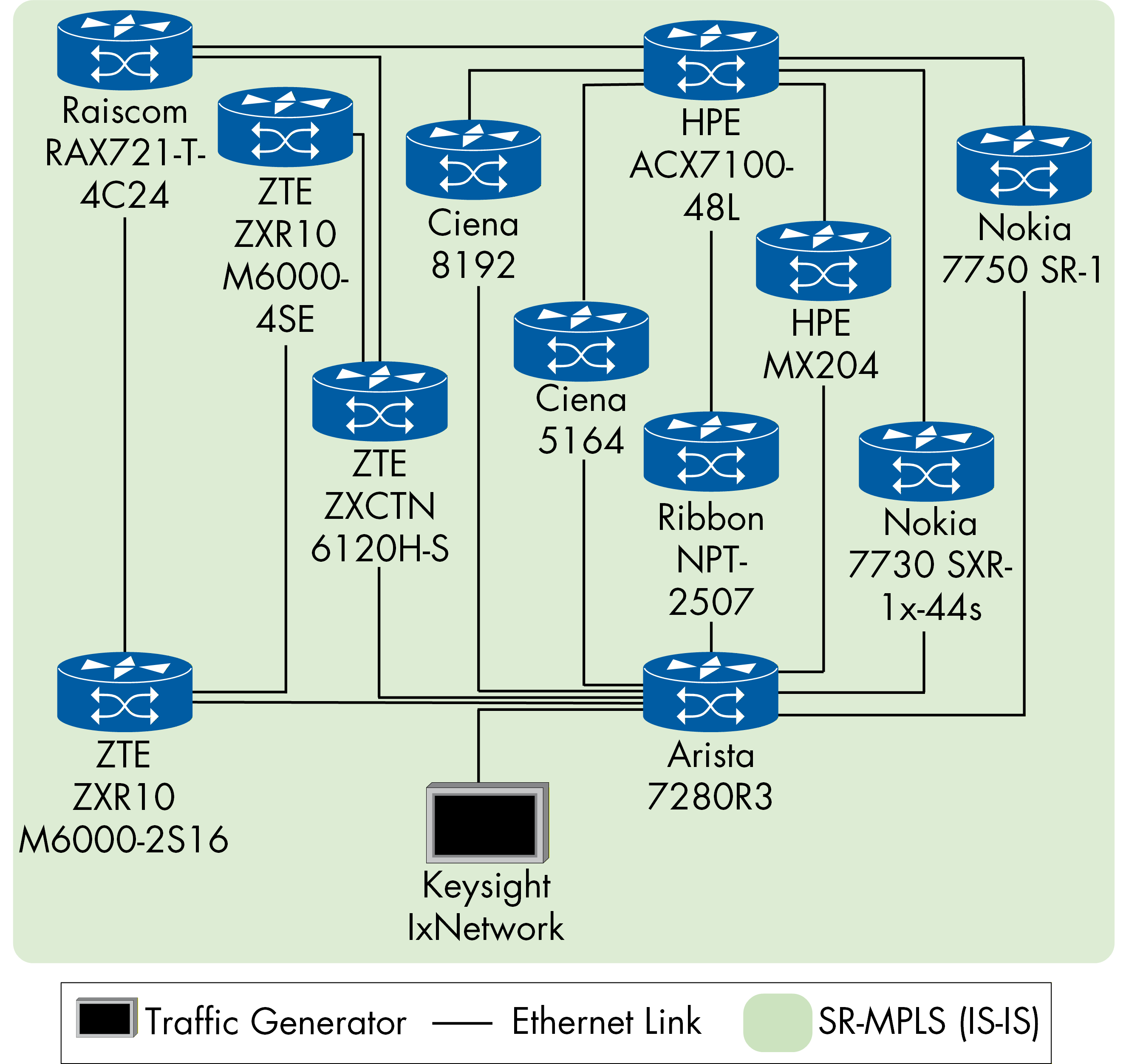
Figure 69: SR-MPLs Flexible Algorithm

Figure 70: SR-MPLs Flexible Algorithm with dynamic measurement
| < Previous | Next > |