

EVPN Port-Active Redundancy Mode
RFC 7432 specifies two main redundancy modes for EVPN multihoming: All-Active, which enables per-flow load balancing across multiple provider edges (PEs), and Single-Active, where only one PE is active per service. Although these modes are widely used, some network designs require interface-level active/standby redundancy to ensure predictable traffic paths and support advanced QoS requirements. To address this, RFC 9786 introduces LACP-based port-active redundancy, ensuring deterministic forwarding and rapid convergence during failures.
In our test, we validated two switch-over mechanisms with the EVPN-VPWS service on top of the port-active group: preference-based and link shutdown. With end-to-end unicast traffic running on the DUT, we first confirmed the service operated smoothly, with no packet loss observed. We then triggered a switch-over by either adjusting the preference or shutting down the active link. As expected, brief packet loss occurred during the transition, but traffic resumed within three seconds and remained stable thereafter. These results confirm that the redundancy mechanism performed as intended.

Figure 37: EVPN Port-active redundancy mode with preference switch over combi 1

Figure 38: EVPN Port-active redundancy mode with preference switch over combi 2

Figure 39: EVPN Port-active redundancy mode with preference switch over combi 3

Figure 40: EVPN Port-active redundancy mode with preference switch over combi 4

Figure 41: EVPN Port-active redundancy mode with preference switch over combi 5
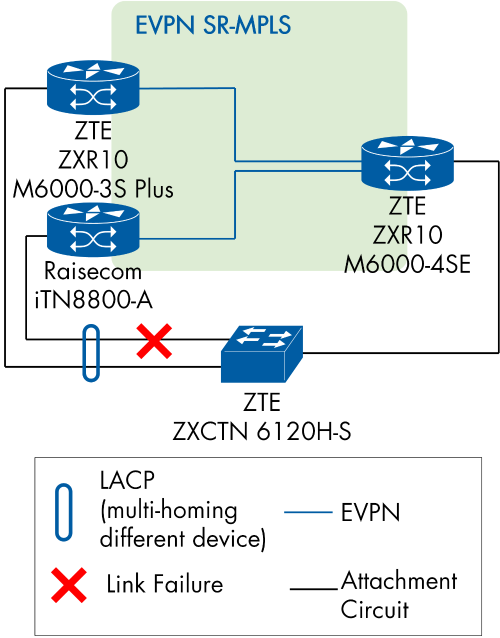
Figure 42: EVPN Port-active redundancy mode with link shutdown switch over combi 1
| < Previous | Next > |